
Why Creative Plans Fall Apart
And How to Build Ones That Don’t

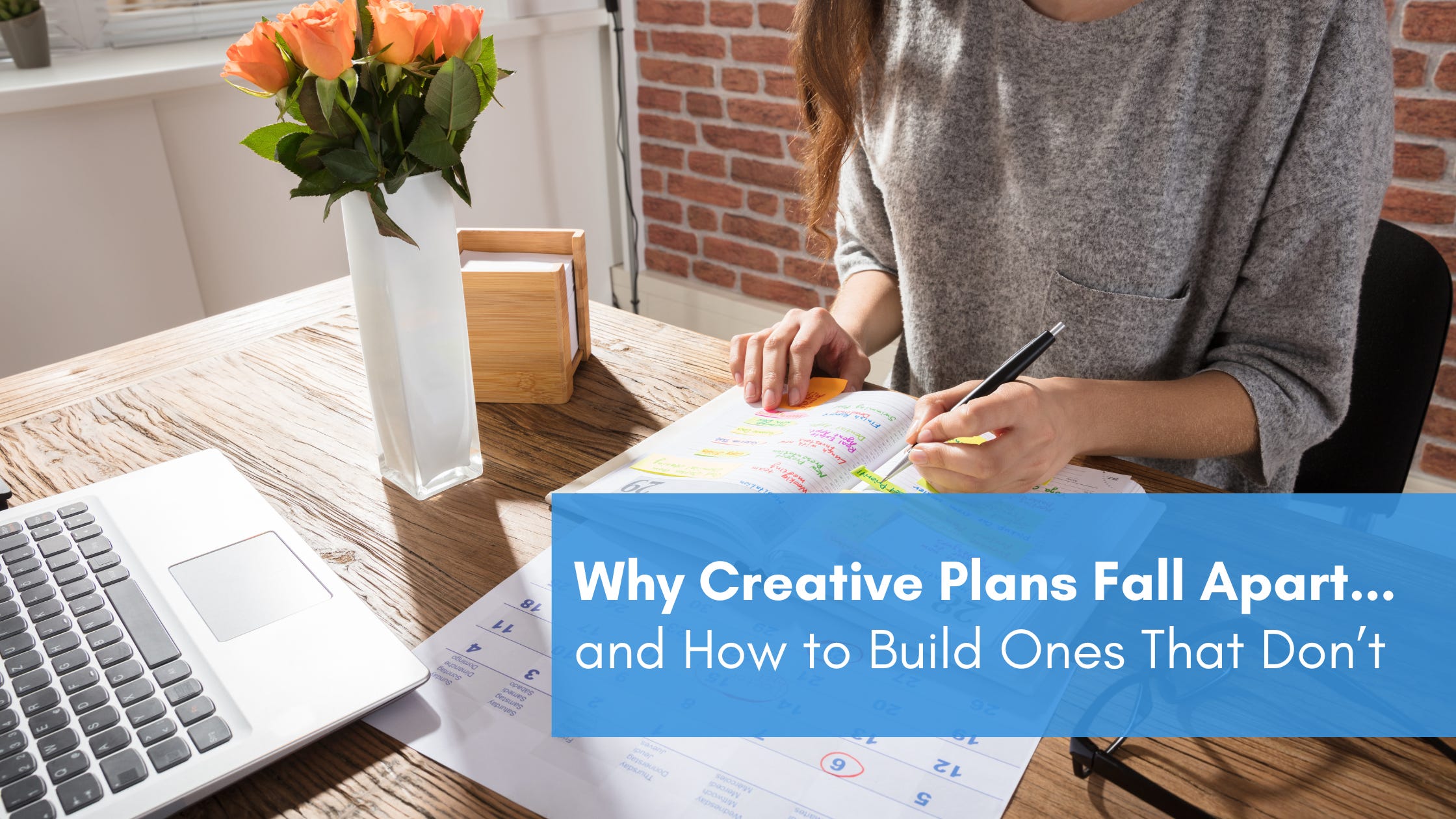
You’ve got the notebook, the coffee, and the burst of motivation that feels unstoppable. You write your plans, sketch your goals, maybe even colour-code your calendar.
And then, two weeks later, you’re completely off it.
The plan that felt so exciting suddenly feels like pressure. You start avoiding it. You feel guilty for not following through. Before long, you’re back where you started: Surrounded by ideas, unsure which one to pick up next.
If that sounds familiar, you’re not broken. You’re creative.
And the truth is, most planning systems were never designed for you in the first place.
Why Traditional Planning Doesn’t Fit Creative Work
Most planning frameworks are built for predictability. They assume clear inputs and measurable outputs.
They work perfectly for linear projects:
marketing campaigns
launches,
building websites, or
hitting sales targets.
But creativity doesn’t move in straight lines.
A creative process involves curiosity, intuition, and exploration. It’s a conversation between your inner world and the work itself. There are moments of flow, sudden sparks of clarity, and long stretches of uncertainty where things are quietly forming.
Traditional plans don’t leave room for that. They expect you to know all the steps before you begin, to estimate timelines for ideas that are still seedlings. They ask you to be efficient when you actually need to be open.
And when that kind of plan inevitably collapses, you blame yourself — instead of recognizing that the system was never built for your kind of work.
Creativity Needs a Living Plan
A living plan is different.
It’s not about locking yourself into a rigid structure. It’s about giving your ideas somewhere to live, somewhere to grow.
A living plan is adaptable. It honors your creative rhythm. It shifts with you as life shifts. It allows for real progress without demanding perfection.
If your plans have been falling apart lately, try rebuilding them around these four principles.
1. Plan by Energy, Not Just Time
We’ve been taught to plan by hours on a clock, but creativity doesn’t follow a 9-to-5 schedule.
Instead of asking, “When do I have time to do this?” start asking, “When do I have energy for this?”
Notice your natural rhythms. Do you create best in the quiet of morning or late at night when the world has slowed down? Are you more focused after a walk, or when you’ve had a day to rest?
Align your creative work with those energy windows. You’ll do better work, faster, and with less resistance.
You’re working with yourself, not against yourself.
2. Name Your Season
Creativity moves in cycles. There are seasons for gathering, for building, for refining, and for resting.
When you name your current season, you give yourself permission to focus.
Maybe you’re in a gathering season, where ideas are flowing but nothing’s ready to be shaped. Maybe you’re in a building season, where it’s time to choose one project and bring it to life. Or maybe you’re in a resting season, where the best thing you can do is pause and replenish.
Naming your season stops you from feeling like you should be doing everything at once. It helps you meet yourself where you are… not where you think you “should” be.
3. Create Margin for the Unexpected
Creativity thrives on space. Yet so many of us plan our days to the minute, leaving no breathing room for the sparks that appear mid-process.
Building margin into your plan is an act of creative self-respect.
Leave time between projects. Leave space in your week where nothing is scheduled. That blank space isn’t wasted. It’s where ideas cross-pollinate, where you reconnect with curiosity, and where your best insights usually arrive.
Margin is not laziness. It’s creative fuel.
4. Reflect Weekly… Gently
Planning is only half the process. Reflection is the other half.
Every week, take 10 minutes to ask yourself three questions:
What worked?
What didn’t?
What do I want to carry forward?
You don’t need a complex journaling ritual. Just a moment of awareness. Reflection helps you see patterns in your energy, your habits, and your ideas. It helps you plan smarter next time… not harder.
Over time, this becomes a rhythm. Your plans stop being static lists and start becoming conversations with your creative self.
Let Go of the Five-Year Plan
Here’s the truth most business advice doesn’t admit: creative people rarely thrive on five-year plans.
Because creativity is alive. It changes shape as you do.
What you want now might evolve in six months. What lights you up today might lead somewhere completely unexpected next year. That’s not failure. That’s the point.
Instead of a five-year plan, try thinking in seasons.
Ask:
What feels alive right now?
What can wait until later?
How can I honour both?
That approach keeps your creative journey spacious. You can still hold long-term visions (books, art, launches, or business goals) without forcing them into rigid timelines.
Build Scaffolding, Not Cages
Your plan should hold you, not trap you.
Think of it like scaffolding. It supports you while you build. You can lean on it when you need stability, but you can also move it around, take it apart, or rebuild it when things shift.
Rigid plans might look neat on paper, but flexible ones build momentum. They make space for the messiness of being human. They remind you that progress doesn’t always look like straight lines.
Because your creative work doesn’t exist in a vacuum. It’s shaped by your life, your health, your relationships, your energy, your world.
When you plan with that truth in mind, you stop fighting the process. You start flowing with it.
A Gentle Reminder
Planning isn’t about control. It’s about trust.
Trusting that your ideas will unfold when they’re ready. Trusting that your rhythm is enough. Trusting that structure and freedom can coexist.
If your plans keep falling apart, maybe it’s time to build ones that breathe with you.
In Episode 9 of Doodles in the Margins, I talk more about how to plan creative projects in a way that supports your real life, with practical steps to help you start small and stay grounded.
Because creativity doesn’t need perfection. It needs rhythm, kindness, and space to grow.
🎧 Listen to Episode 9: “How to Plan Your Creative Projects (Without Losing Your Spark)” on Substack or your favourite podcast platform.